
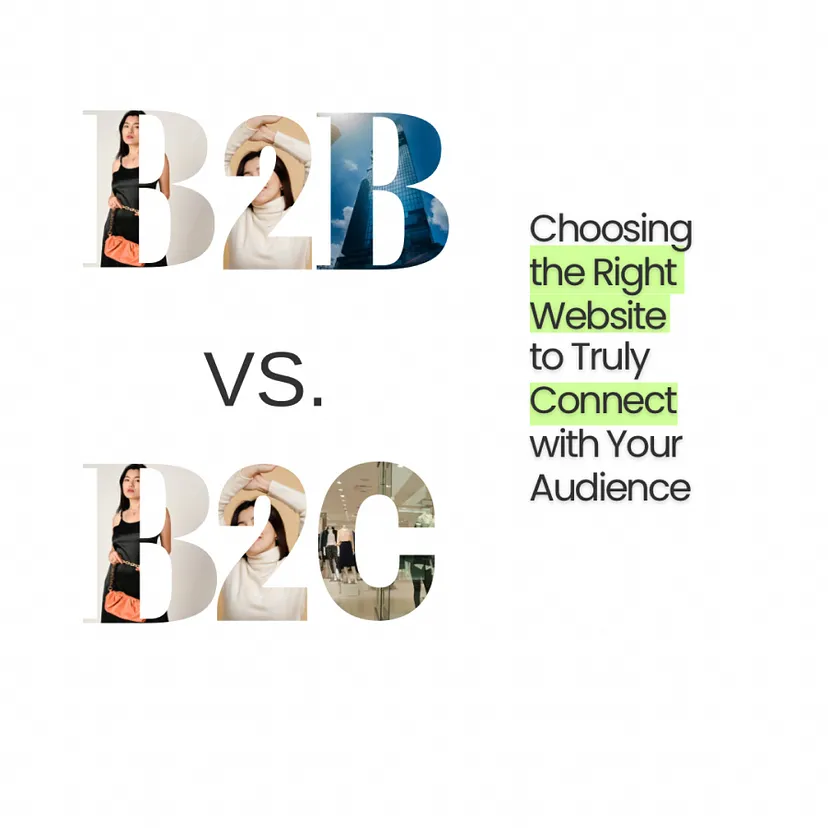
Business-to-Business (B2B) vs. Business-to-Consumer (B2C) Web Design: Choosing the Right Website to Truly Connect with Your Audience
In web design, understanding your audience is essential to creating a successful website. At PK Design, we recognise that websites serving other businesses (Business-to-Business) have distinct needs compared to those aimed at individual consumers (Business-to-Consumer). Reflecting these differences in your website design is crucial for making genuine connections and achieving your business goals. Here’s a guide to understanding these differences to help you make informed choices about your website – and why working with an experienced team can make all the difference.
Who’s Your Audience? Business-to-Business vs. Business-to-Consumer Websites
• Business-to-Business (B2B): B2B websites are designed for decision-makers within other businesses, such as managers or executives, who seek reliable solutions with clear value for their organisations.
• Business-to-Consumer (B2C): B2C websites are crafted to engage individual consumers, who are often motivated by convenience, personal preferences, or cost, and who expect a fast, engaging experience that supports quick decision-making.
Key Differences in Design for B2B and B2C Websites
1. Decision-Making Process
• B2B: The decision-making process in B2B is often complex, with multiple stakeholders involved. B2B websites benefit from providing resources and information that support these longer decision cycles, such as case studies, testimonials, and detailed product descriptions.
• B2C: In contrast, the journey from “interested” to “purchased” in B2C is generally quicker, often happening in a single visit. B2C designs are typically more direct and visually engaging, allowing customers to find what they need and make decisions efficiently.
A professional design team can help structure your website to guide your unique audience, whether they’re conducting research or ready to buy, ensuring a seamless experience for visitors at every stage.
2. Content and Messaging
• B2B: B2B sites tend to use straightforward, data-driven content focused on demonstrating expertise and clear value. This might include in-depth blog articles, reports, or downloadable guides that help establish credibility and trust.
• B2C: B2C websites often rely on conversational language, visuals, and storytelling to create a connection. Customer reviews, product images, and relatable language help reassure buyers and increase their confidence in making a choice.
Creating content that resonates with your audience requires precision. A design team with experience in both B2B and B2C strategy can craft messaging that aligns with your goals and captures your brand’s voice effectively.
3. Calls-to-Action (CTAs)
• B2B: B2B CTAs are generally focused on nurturing long-term relationships. They might include options to “Download a Guide,” “Request a Demo,” or “Schedule a Call,” supporting a longer decision cycle and encouraging ongoing engagement.
• B2C: B2C CTAs are designed for immediate action, often aiming to close a sale or prompt an impulse buy. Simple prompts like “Buy Now” or “Add to Cart” streamline the process and encourage quick decisions.
Crafting effective CTAs requires a balance of psychology and design. A professional team can identify the optimal CTAs to encourage actions that matter most to your business without overwhelming visitors.
4. Design and User Experience
• B2B: B2B websites typically feature clean, professional designs with easy navigation, allowing users to quickly locate specific information. These layouts are usually minimalistic and functional, helping users focus on the content.
• B2C: B2C sites, on the other hand, use engaging visuals and interactive features to capture attention and encourage exploration. User-friendly layouts and intuitive checkout processes are essential, particularly for e-commerce-driven websites.
For both B2B and B2C, user experience plays a major role in retaining visitors and converting them into customers. An experienced design team understands the nuances of UX and ensures your site looks great and functions seamlessly.
SEO and Content Strategy
Both B2B and B2C websites benefit from strong SEO and content strategies, but the approaches differ significantly:
• B2B: SEO for B2B sites often focuses on industry-specific keywords that potential buyers search for during their research phase. Content such as long-form blogs, case studies, and whitepapers not only builds authority but also helps attract leads interested in exploring your services.
• B2C: B2C SEO typically targets broader keywords with high search volumes to attract traffic and drive quick conversions. Short, engaging content such as product guides, FAQs, and promotional blogs helps capture interest, answer common questions, and support purchase decisions.
An experienced team can craft SEO strategies that cater to your audience’s search habits and ensure your business reaches potential customers when they’re searching for solutions like yours.
Which Approach Suits Your Business?
Understanding the key differences between Business-to-Business and Business-to-Consumer websites can help guide your design and content choices to better align with your audience’s needs. Whether you’re focused on attracting businesses with a need for detailed insights or reaching consumers with an engaging, visually appealing experience, a tailored approach makes all the difference.
By designing a website that speaks directly to your target audience’s priorities and browsing habits, you’ll be well-positioned to make a meaningful impact online. Looking to build a website that not only looks professional but also resonates with your audience? Contact PK Design today to create a customised online presence that delivers real results.