

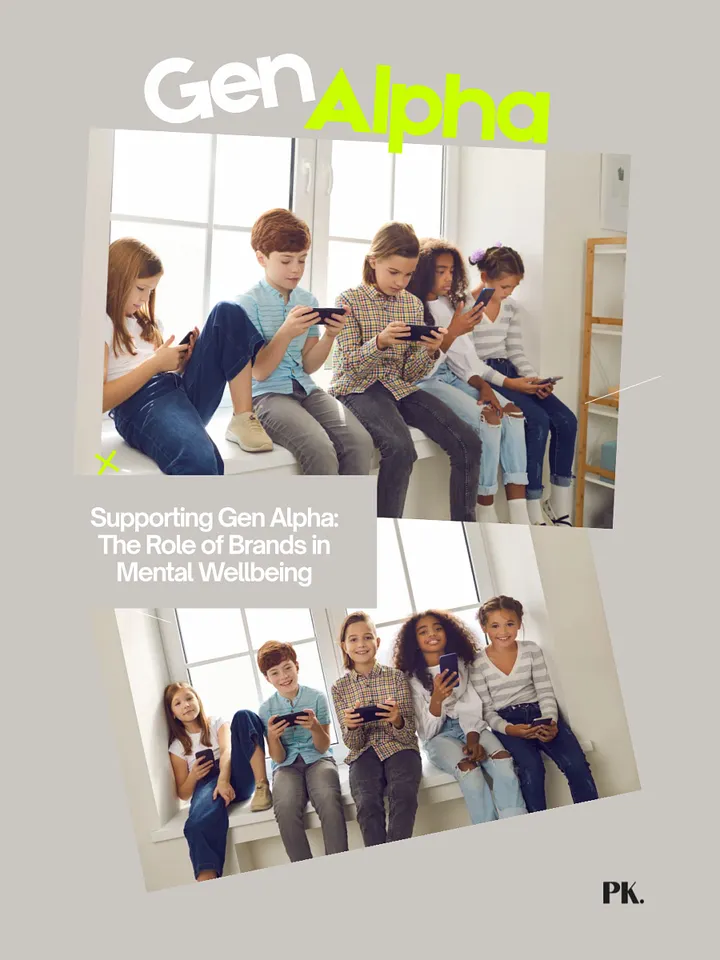
Supporting Gen Alpha: The Role of Brands in Mental Wellbeing
We are living in a time where the first generation born entirely into the digital world – Generation Alpha is growing up fast.
Born between 2010 and 2025, these children are the sons and daughters of Millennials and the younger siblings of Gen Z. They are not just tech-savvy – they are tech-native. Many learn to swipe before they can speak, ask smart speakers questions before they can write, and navigate YouTube or TikTok before reading full sentences.
With their deep immersion in the digital world comes not just opportunity but serious emotional and psychological risk.
Who is Gen Alpha?
Gen Alpha is poised to become the largest generation in history, projected to exceed 2 billion globally by the time the last of them is born. By the 2030s, they will enter their teens and early adulthood, with enormous cultural, economic, and technological influence.
Key traits shaping this generation include:
• Digital First: Raised with smartphones, tablets, and screens as part of daily life from birth.
• Visually Literate: Accustomed to consuming and communicating through images, short videos, memes, and emojis.
• Early Exposure: Many have had access to social media platforms before even reaching primary school, often through family-shared content or kid-friendly versions.
• Highly Informed, Easily Overwhelmed: Constant exposure to world events, social trends, and online commentary means Gen Alpha can be emotionally aware and globally conscious but also overstimulated.
The Mental Health Challenges Gen Alpha Faces
As digital citizens from birth, Gen Alpha faces mental health challenges unlike any generation before them. These include:
- Screen Time and Digital Dependency
On average, children aged 5 – 12 spend 4 – 6 hours per day on screens. For older pre-teens, this can stretch even further. Research suggests prolonged exposure to screens impacts sleep quality, attention span, mood regulation, and even physical development.
2. Dopamine-Driven Design
Apps and platforms are engineered to hold attention and create habitual use, often prioritising likes, notifications, and endless scrolling over genuine connection. These systems can create addictive cycles that affect emotional regulation, self-worth, and focus.
3. Filtered Reality and Perfectionism
Even at a young age, children absorb unrealistic beauty standards, social dynamics, and peer validation through what they see online. Gen Alpha is exposed to hyper-curated images and performative lifestyles before their own sense of self is fully formed.
4. Information Overload
Gen Alpha lives in a world of rapid-fire content and non-stop news. From climate anxiety to viral drama, children are often absorbing more than they can emotionally process with little space for reflection or regulation.
5. Online Bullying and Digital Comparison
While cyberbullying affected older generations too, Gen Alpha experiences it at a younger and more emotionally vulnerable age. For many, digital comparison begins in early childhood, not adolescence.
The Rise of Gen Alpha Slang: A Window into Their Culture
Gen Alpha communicates with speed, humour, and abbreviation. Some common phrases include:
• “No cap” – I’m being serious / not lying
• “Rizz” – Charisma or charm
• “Delulu” – Delusional thinking, usually lighthearted
• “Slay” – To do something well or confidently
• “It’s giving…” – Describing a vibe, style, or energy
• “NPC” – Someone acting in a robotic or unoriginal way
While these expressions can seem confusing, they also signal something deeper – a generation that plays with language to make sense of identity, emotion, and connection in a hyper-digital world.
What Does This Mean for Brands and the Digital World?
As Gen Alpha grows, they will not just shape digital culture – they will demand it to evolve. This generation is:
• Values-Driven: They expect brands to be inclusive, ethical, and eco-conscious by default.
• Mental-Health Aware: They are growing up in a time when emotional wellbeing is openly discussed, but rarely modelled well online.
• Highly Critical: Gen Alpha has a built-in filter for inauthenticity. Brands that try too hard, or speak down to them, will be dismissed instantly.
• Creatively Empowered: With access to design tools, video editing, and AI, this generation will be creators as much as consumers.
In short: Gen Alpha will challenge brands to move from noise to meaning. From content that grabs attention to digital spaces that hold attention in healthier ways.
A New Digital Responsibility
For designers, marketers, educators, and brand creators – this is a moment to reflect. The digital environment we create today is the mental landscape Gen Alpha will grow up in.
That means:
• Reducing overstimulation in user interfaces
• Designing digital experiences that respect cognitive and emotional development
• Crafting messages that are truthful, inclusive, and calm
• Creating slower, more meaningful brand storytelling
• Being mindful about the values embedded in every post, ad, or interface
Design is not neutral , it always communicates something.
Final Thoughts
Gen Alpha is not just another generation of consumers. They are the future stewards of our digital, social, and emotional worlds.
As creators, we have the opportunity and the responsibility to shape online environments that don’t just perform, but protect.
Aesthetic is important. But integrity is essential.
Let’s build digital spaces where the next generation can thrive, with clearer minds, healthier hearts, and more hopeful futures.